For most small businesses, getting more customers online is not about finding one magic marketing channel.
It is usually about several simple things working together.
A potential customer might first discover you through Google.
They may then visit your website.
They might check your reviews.
They may compare you with two or three competitors.
Only then do they decide whether to call, enquire or book.
That means your online presence needs to work as a connected system.
You need to be found.
You need to look credible.
And you need to make the next step easy.
Here are the areas I would focus on first.
1. Start with a professional website
Your website is often the centre of everything else.
SEO sends people to it.
Google Ads sends people to it.
Your Google Business Profile may send people to it.
Potential customers may search your company name and visit it before deciding whether to contact you.
A small business website should quickly answer four questions:
- What do you do?
- Who do you help?
- Why should I trust you?
- What should I do next?
If those answers are not immediately clear, the website may be losing enquiries before you even know they existed.
A professional website does not need to be enormous.
It needs to be clear, trustworthy and easy to use.
2. Make sure the website works properly on mobile
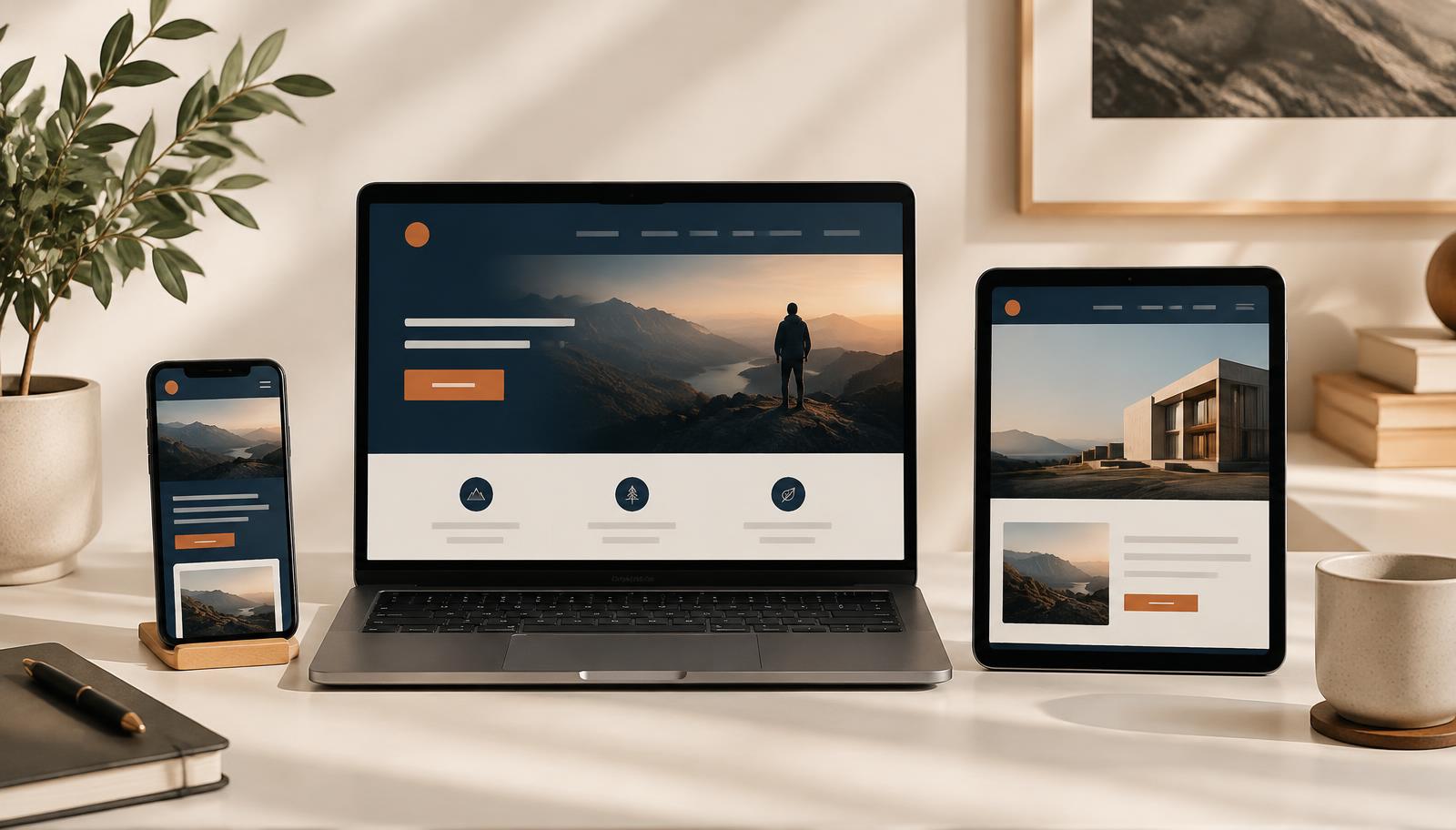
A website can look excellent on a desktop computer and still perform badly for customers using a phone.
Common mobile problems include:
- text that is too small
- buttons that are difficult to tap
- slow loading
- oversized images
- poor navigation
- forms that are awkward to complete
- telephone numbers that are difficult to find
For many local businesses, a potential customer may be searching while travelling, at work or standing outside with their phone.
Mobile usability should therefore be part of the basic website experience, not an optional extra.
3. Get the SEO basics right
SEO and organic search can sound complicated, but the foundations are quite straightforward.
Google needs to understand what your business does and which searches your pages are relevant to.
For a small business, that normally means having clear pages for your main services rather than trying to squeeze everything onto one page.
For example, instead of one page simply called "Services", a business may benefit from separate pages for its most important services.
Those pages should clearly explain:
- what the service is
- who it is for
- where it is available
- what is involved
- why a customer should choose the business
SEO foundations can also include:
- good page titles
- clear headings
- sensible URLs
- internal links
- image optimisation
- meta descriptions
- sitemap
- indexing
- mobile performance
4. Think about what your customers actually search for
Businesses often describe themselves differently from customers.
You may use an industry-specific term.
Your customer may search something much simpler.
A business might describe itself as providing:
"Residential building pathology consultancy"
while potential customers are searching:
"building surveyor near me"
Understanding customer language matters.
SEO should therefore begin with search intent rather than simply inserting keywords into pages.
Ask:
What would someone type into Google if they needed this service today?
That question can shape your:
- page titles
- service pages
- location pages
- FAQs
- articles
- advertising
5. Build your local Google presence
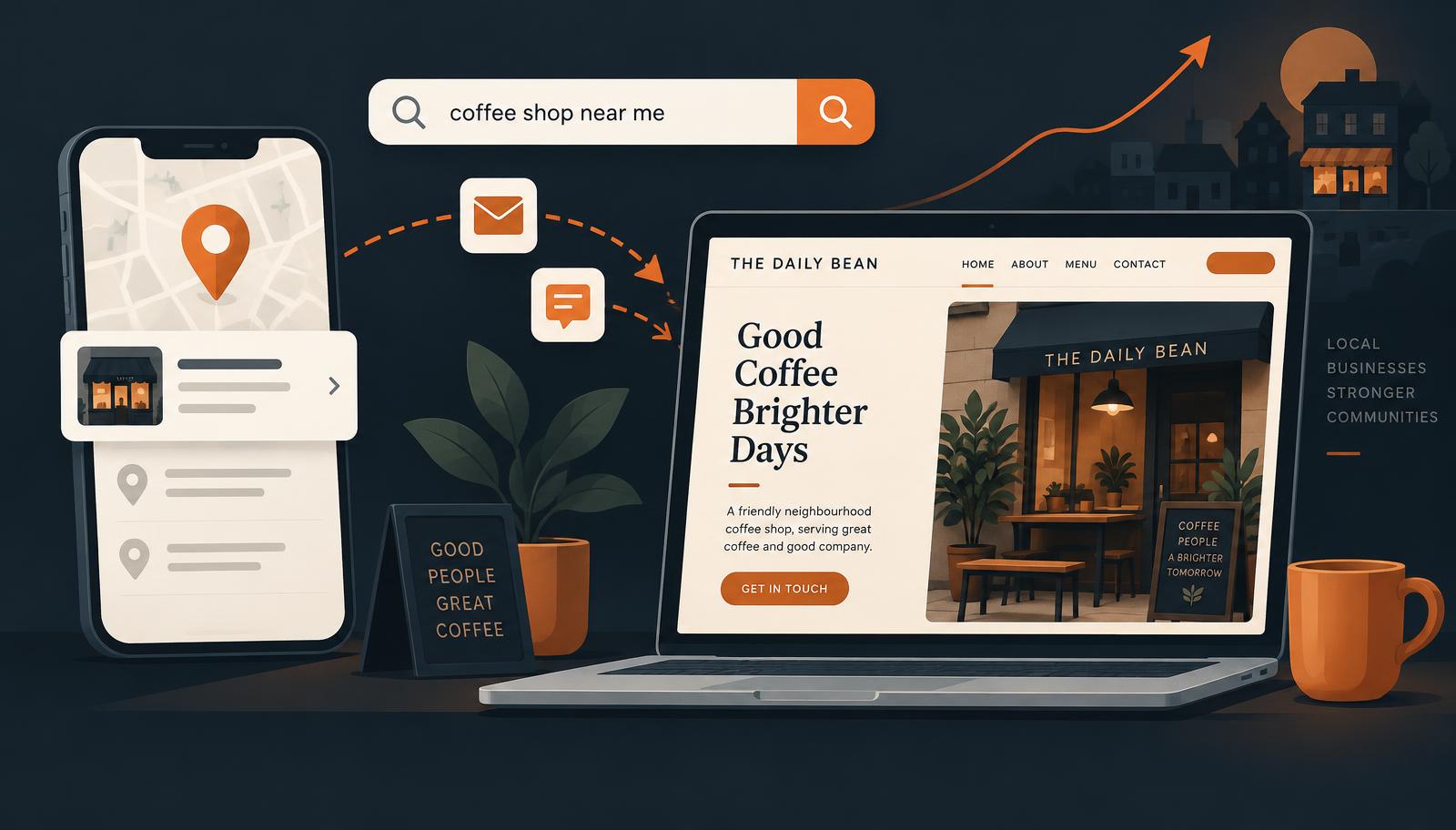
For businesses serving a local area, Google Business Profile can be extremely important.
It may help your business appear in local search and Google Maps.
Your profile should be complete and accurate.
Useful areas to review include:
- business category
- services
- telephone number
- website
- opening hours
- service areas
- business description
- photographs
Keep the information consistent with your website.
If the website says one thing and your Google profile says something different, it creates unnecessary confusion.
6. Get genuine customer reviews
Reviews do more than make a star rating look good.
They help potential customers reduce uncertainty.
A new customer may know very little about your business.
They want reassurance that:
- you are legitimate
- you do what you say
- other people have used you
- customers have had a good experience
Make asking for reviews part of the normal customer journey.
Do not wait until you suddenly realise you need 20 reviews.
Ask consistently.
And use genuine reviews on the website where appropriate.
7. Make it easy to contact you
This sounds obvious.
It is often overlooked.
If a customer has decided they may want your service, do not make them work hard to contact you.
Consider:
- clear telephone number
- obvious contact button
- simple enquiry form
- email where appropriate
- booking option where relevant
Your calls to action should make sense.
Examples might include:
- Request a Quote
- Book a Consultation
- Check Availability
- Call Us
- Start Your Project
Avoid hiding the contact page behind several layers of navigation.
8. Do not ask for too much information
A contact form should collect what you need to start the conversation.
It does not normally need to collect everything you could possibly want to know.
Long forms can create friction.
For many businesses, a first enquiry may only need:
- name
- telephone
- service
- short message
Additional information can be collected later.
The easier it is to take the first step, the more likely some customers are to do it.
9. Use Google Ads when you need faster visibility
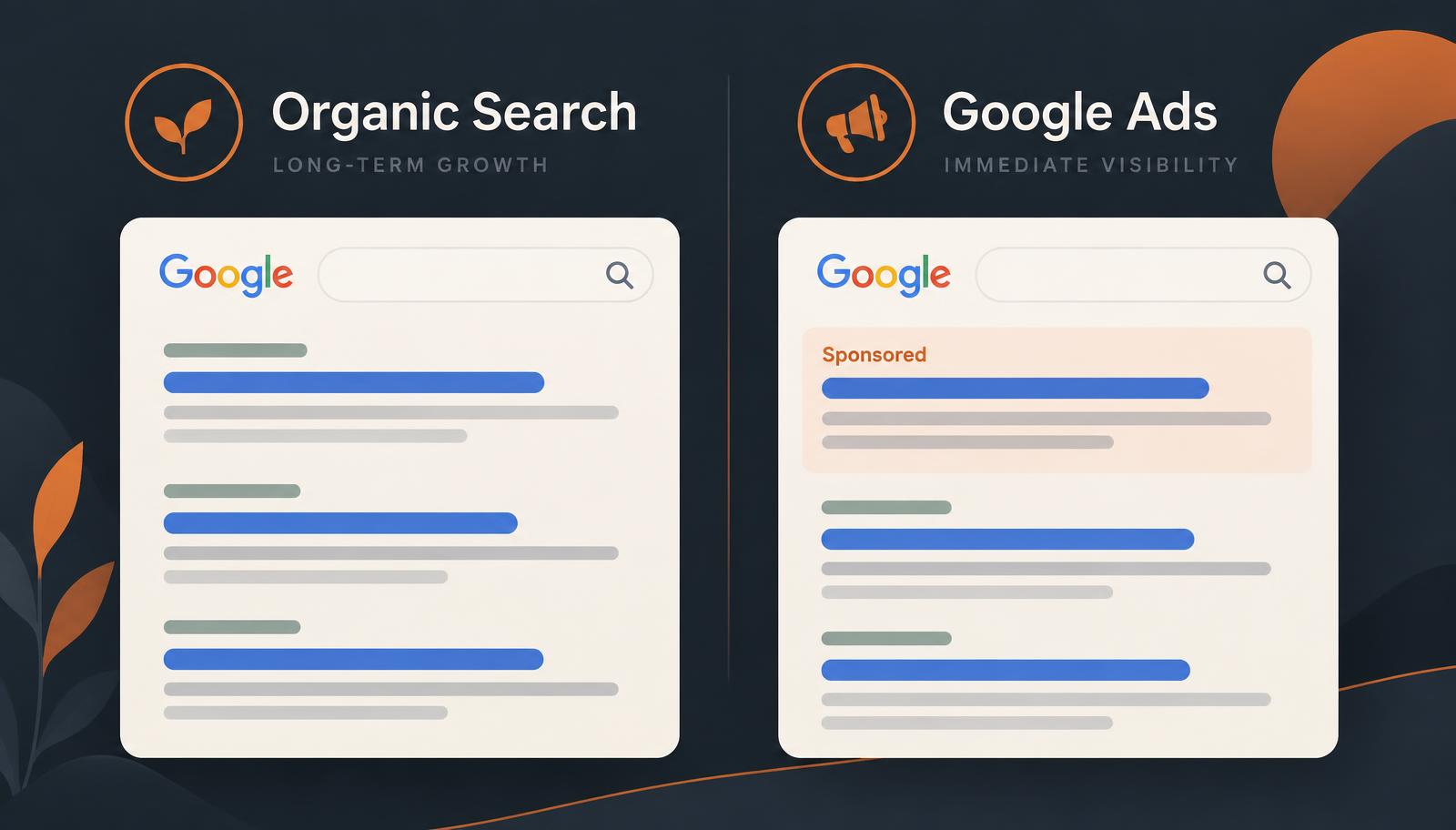
SEO can take time.
Google Ads can provide faster exposure.
This can be useful for:
- new businesses
- new websites
- new services
- new locations
- competitive markets
- testing demand
The advantage of Google Ads is control.
You can target:
- specific searches
- specific areas
- specific times
- specific landing pages
But paid search should be managed carefully.
A poorly configured campaign can spend money on irrelevant searches very quickly.
That is why keywords, negative keywords, location targeting and conversion tracking matter.
10. Do not rely on traffic alone
Getting more visitors is not the same as getting more customers.
A business can have increasing website traffic while enquiries remain flat.
That often means the issue is somewhere further down the journey.
Potential problems include:
- weak messaging
- lack of trust
- poor calls to action
- slow pages
- poor mobile usability
- complicated forms
- irrelevant traffic
The objective is not simply:
More traffic.
It is:
More relevant traffic that turns into meaningful enquiries.
11. Show evidence
A business can say:
"We provide excellent service."
So can every competitor.
Evidence is much more persuasive.
Useful proof might include:
- reviews
- qualifications
- case studies
- previous projects
- professional memberships
- genuine photographs
- years of experience
- client examples
Use what is appropriate for your industry.
Do not fill the website with generic claims that could apply to any company.
12. Answer the questions customers ask
Your website should help customers make a decision.
Think about the questions you receive repeatedly by phone or email.
These may include:
- How much does it cost?
- How quickly can you do it?
- Where do you operate?
- What is included?
- What happens next?
- Do you provide ongoing support?
- What experience do you have?
These questions are excellent material for:
- FAQs
- service pages
- Insights articles
- sales pages
The more uncertainty you remove, the easier it becomes for a customer to make contact.
13. Create useful content
Content should not exist simply because someone told you that SEO needs blogs.
Create content that answers real customer questions.
For example, a web design company might write:
- How Much Does a Business Website Cost?
- Website vs Web App: Which Do You Need?
- What Should a £1,500 Website Include?
A physiotherapist may write about:
- common mobility problems
- recovering after surgery
- home physiotherapy
- what happens during an initial assessment
Useful content can help attract search traffic while also demonstrating expertise.
14. Track what actually happens
One of the biggest advantages of online marketing is that much of it can be measured.
At a basic level, you should understand:
- how people find the website
- which pages they visit
- whether contact forms are completed
- which campaigns produce enquiries
Tools such as Google Analytics and Search Console can help.
If you are running paid advertising, conversion tracking becomes even more important.
Otherwise you may know how many clicks you bought without knowing whether any of them became leads.
15. Improve what is already working
Small businesses sometimes jump from one marketing idea to another.
SEO this month.
Social media next month.
Google Ads the month after.
A better approach is often to identify what is already producing useful results and improve it.
If Google is generating enquiries, strengthen search visibility.
If a particular service page performs well, improve it further.
If one location produces strong demand, consider whether there are similar opportunities nearby.
Marketing usually improves through refinement rather than constant reinvention.
Do you need social media?
Possibly.
But not every small business needs to be active on every platform.
For some businesses, Instagram or TikTok can be very important.
For others, customers primarily search Google when they need the service.
A local plumber may gain far more from:
- Google Search
- Google Maps
- reviews
- a strong website
than from posting every day on social media.
Choose channels based on how customers actually buy.
What should a small business prioritise first?
If I were starting with a limited budget, I would usually prioritise:
1. A professional website
2. Google Business Profile
3. Genuine customer reviews
4. SEO foundations
5. Clear conversion tracking
6. Google Ads if faster traffic is required
7. Useful content over time
You do not need to do everything at once.
The important thing is to create a strong foundation.
The website and marketing should work together
A business can spend heavily on marketing and still struggle if the website is poor.
It can also build a fantastic website that nobody discovers.
The strongest approach is usually:
Search → Website → Trust → Enquiry → Customer
Every stage matters.
This is why web design, SEO, local search and paid advertising should not be treated as completely separate activities.
They are different parts of the same customer journey.
Final thoughts
Getting more customers online does not usually require dozens of complicated marketing tactics.
For many small businesses, the fundamentals are enough:
Be easy to find.
Look professional.
Build trust.
Explain what you do clearly.
Make contact easy.
Track what works.
Then improve it over time.
That is a much stronger foundation than chasing every new marketing trend.
Frequently Asked Questions
What is the best way for a small business to get more customers online?
There is no single best channel. For many small businesses, a strong website, local Google presence, genuine reviews, SEO and clear calls to action provide a solid starting point.
Does a small business need SEO?
If potential customers search online for the services you provide, SEO can be valuable. The importance depends on your market, competition and how customers typically find businesses like yours.
Should a small business use Google Ads?
Google Ads can be useful where there is clear search demand and the business wants faster visibility. It works best when campaigns are carefully targeted and conversions are properly tracked.
Is a website still important for a small business?
Yes. Even where customers initially find the business through Google Maps, social media or recommendations, many will still check the website before making contact.
How important are Google reviews?
For many local and service businesses, reviews are an important trust signal and can influence whether a potential customer chooses to make contact.
Do I need social media to grow my small business?
Not necessarily. It depends on where your customers spend time and how they choose suppliers. Some businesses benefit enormously from social media while others are better served by search, local SEO and referrals.
How much should a small business spend on online marketing?
There is no universal figure. It depends on the business, margins, competition, target area and the value of each new customer. Start with what can be measured and increased once you know what works.